Child Labor and Human Trafficking Laws
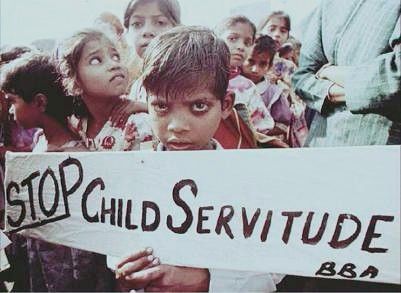
Child labor is a crime prosecutable under national and
international laws. Nonetheless, enforcement is elusive, particularly in
an industry where the supply chain is fragmented and human trafficking
and child labor is often hidden, which is why GoodWeave's innovative
market-based model works to end child labor in the South Asian handmade
carpet industry.
Following is a list of laws crafted to eliminate the practice of child labor.
INTERNATIONAL CONVENTIONS PROHIBITING CHILD LABOR AND SETTING AGE STANDARDS
Minimum Age Convention 138 (C138), 1973
Adopted by the International Labour Organization (ILO) in 1973, C138
binds ratifying countries to pursue a national policy for the abolition
of child labor and to progressively raise the minimum age for employment
or work to a level consistent with the fullest physical and mental
development of young persons. This minimum age should be 15 years, or
the age reached by the completion of compulsory schooling. According to
the convention, the minimum age for work that is likely to jeopardize
the health, safety or morals of young persons is 18. To date, 144
countries have ratified C138, including Nepal in 1997. India and
Pakistan are yet to ratify Convention 138. To learn more about C138
Convention on the Rights of the Child (CRC), 1989
The Convention on the Rights of the Child is the first legally
binding international instrument to incorporate the full range of human
rights for children, including civil and political rights as well as
economic, social and cultural. Article 32 states that children have the
right to be protected from economic exploitation and from performing any
work that is likely to be hazardous or to interfere with the child's
education, or to be harmful to the child's health or physical, mental,
spiritual, moral or social development. The Convention is the most
universally accepted human rights instrument in history and has been
ratified by 192 countries––every country in the world except two, the
United States and Somalia.
Worst Forms of Child Labour Convention 182 (C182), 1999
On June 17, 1999, the ILO adopted Convention 182, which calls for
immediate and effective measures to prohibit and eliminate the worst
forms of child labor. “Child” applies to all persons under the age of
18. “The worst forms of child labor” refers to child slavery, forced
labor, trafficking, debt bondage, serfdom, prostitution, pornography and
forms of work that harm the health, safety or morals of children. To
date, 160 countries have ratified ILO Convention 182, including Nepal in
2002. India is yet to ratify Convention 182.
U.S. LAWS PROHIBITING THE IMPORTATION OF GOODS MADE WITH CHILD LABOR
The Sanders Amendment to the U.S. Tariff Act of 1930
The Tariff Act of 1930 prohibits the importation of products made
with "forced or indentured labor" into the United States. In 1997, the
Sanders Amendment clarified that this applies to products made with
"forced or indentured child labor."
The Generalized System of Preferences (GSP)
Enacted in 1974, the GSP program authorizes approximately 4,284
products from 140 developing countries, including India and Nepal, to
enter the United States market duty-free. In 1984, new provisions took
away U.S. trade preferences from countries that systematically deny
internationally recognized workers' rights. These rights include:
freedom of association; the right to organize and bargain collectively; a
prohibition of any form of forced or compulsory labor; and acceptable
conditions of work with respect to minimum wages, hours of work and
occupational safety and health.
Trade and Development Act of 2000
This Act, signed into law in May 2000, affords special trade benefits
to Sub-Saharan Africa and the Caribbean Basin countries. Section 411
clarifies that the ban on articles made with forced and/or indentured
labor under the Trade Act of 1930 now includes goods made with forced
and/or indentured child labor. Section 412, worst forms of child labor, denies U.S. trade preferences to countries that fail to meet and effectively enforce the standards established by ILO C182.
GoodWeave is currently the only certification program established to
assure that carpets are not made with child labor in India, Nepal and
Afghanistan.
OTHER U.S. LAWS
California Transparency in Supply Chains Act of 2010
In four little legislative pages the law establishes that slavery
exists everywhere and it is in the interest of the State to combat it.
From: http://www.goodweave.org/child_labor_campaign/laws

No hay comentarios:
Publicar un comentario